By: dr.Vardian Mahardika, M.Biomed, SpPD, AIFO-K
Many people are surprised when their medical check-up results show “fatty liver,” even though they previously felt completely fine. This is one of the reasons why the condition is often detected late: fatty liver frequently develops without clear symptoms.
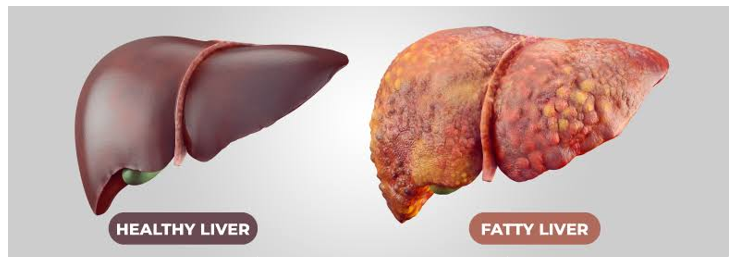
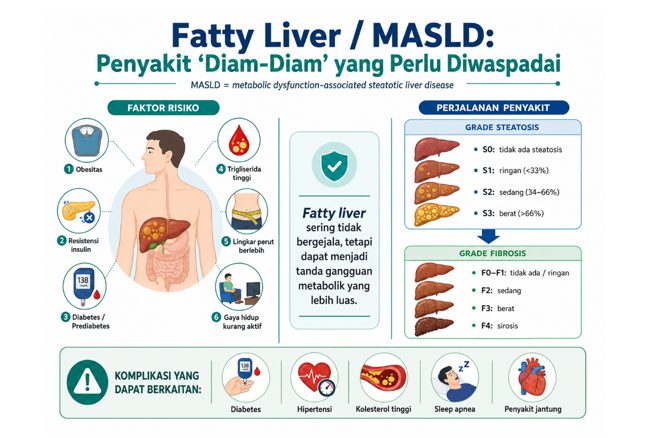
In more recent terminology, this condition is referred to as MASLD (metabolic dysfunction-associated steatotic liver disease), which is the accumulation of fat in the liver closely linked to metabolic disorders such as obesity, insulin resistance, diabetes, high cholesterol, high triglycerides, and increased waist circumference.
Why Should Fatty Liver Be Taken Seriously?
The liver is a vital organ responsible for metabolism of sugars, fats, and proteins, detoxification, and energy storage. When excessive fat accumulates in the liver, its function can be impaired. In the early stages, the condition may still be mild. However, if left untreated, some patients may develop liver inflammation, fibrosis, and even cirrhosis.
It is also important to understand that fatty liver is not just a liver problem. In many patients, it serves as an “alarm” indicating broader metabolic dysfunction. Therefore, when I encounter patients with fatty liver, I do not only assess liver imaging results but also evaluate blood sugar levels, lipid profiles, blood pressure, body composition, and other metabolic risk factors.
Who Is at Risk?
Fatty liver is more commonly found in individuals with:
- overweight or obesity
- diabetes or prediabetes
- high triglycerides
- uncontrolled cholesterol
- increased waist circumference
- high blood pressure
- a sedentary lifestyle
However, it is important to note that individuals who do not appear significantly overweight can still develop fatty liver, especially if they have high visceral fat or insulin resistance.
What Are the Symptoms?
In many cases, there are no specific symptoms. This is why fatty liver is often discovered during routine medical check-ups, ultrasound examinations, or laboratory tests. Some patients may experience fatigue, discomfort in the upper right abdomen, or elevated liver enzymes, but these symptoms are not always present.
Because symptoms are often minimal, early evaluation is important, especially for individuals with metabolic risk factors.
What Tests Are Needed?
Evaluation usually begins with:
- medical history and physical examination
- blood tests, including liver function, blood sugar, and lipid profile
- liver imaging when necessary
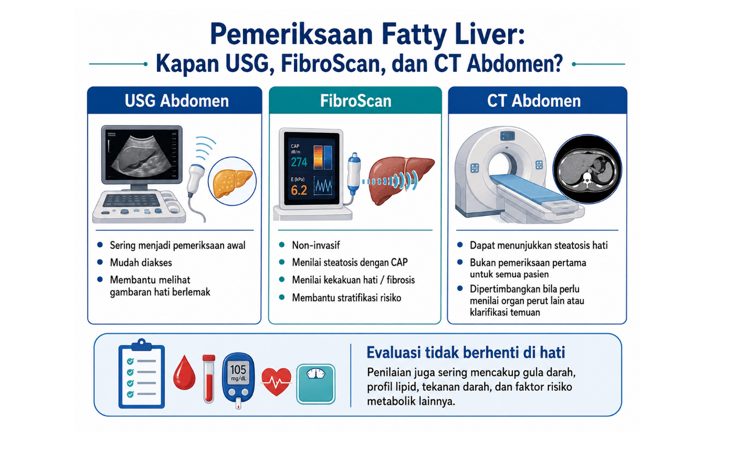
Abdominal ultrasound is often used as an initial test because it is widely accessible and can help detect fatty liver. However, if we want to assess whether there is liver stiffness or fibrosis, FibroScan is very useful. This non-invasive test helps evaluate liver fat (steatosis) and liver stiffness (fibrosis).
MASLD Grades (Liver Steatosis)
The degree of fat accumulation in the liver is generally classified as:
- S0: no steatosis
- S1 (mild): fat < 33% of liver cells
- S2 (moderate): fat 34–66%
- S3 (severe): fat > 66%
This assessment can be estimated through ultrasound or more accurately measured using FibroScan with the CAP (Controlled Attenuation Parameter).
Fibrosis Grades (FibroScan)
FibroScan also provides information about liver stiffness related to fibrosis:
- F0–F1: no or mild fibrosis
- F2: moderate fibrosis
- F3: severe fibrosis
- F4: cirrhosis
The higher the fibrosis stage, the more important it is to conduct closer monitoring and more intensive management.
What about an abdominal CT scan? CT scans can detect liver steatosis and sometimes identify fatty liver incidentally when patients undergo imaging for other complaints. However, in practice, CT is not always the first-line examination for all fatty liver patients. It is usually considered in specific situations, such as when evaluating other abdominal organs, clarifying uncertain findings, or addressing additional clinical questions that cannot be answered by initial tests.
Can Fatty Liver Improve?
The good news is: yes, in many cases fatty liver can improve, especially if detected early and the underlying metabolic issues are addressed. The main treatment still begins with lifestyle changes.
Gradual and measurable weight loss has a significant impact on liver health. In general, a weight reduction of about 5% can help reduce liver fat, 7–10% can help improve liver inflammation, and greater weight loss may provide additional benefits for fibrosis in certain patients.
In addition, adopting a more structured diet, reducing sugary drinks and ultra-processed foods, increasing protein and fiber intake, and exercising regularly all play important roles in improving this condition. In certain patients, managing comorbidities such as diabetes, obesity, or dyslipidemia is also a crucial part of treatment.
When Should You Seek Consultation?
You should consider further evaluation if:
- your medical check-up shows fatty liver
- liver enzymes are elevated
- you have obesity, diabetes, or high triglycerides
- your waist circumference continues to increase
- you have difficulty losing weight
- there is a family history of metabolic disease
Fatty liver is not a condition that should simply be “monitored while waiting.” The earlier it is evaluated, the greater the chance of preventing progression.
Conclusion
Fatty liver is often a silent condition, but it should not be underestimated. Behind what may seem like a simple ultrasound or check-up result, there is often a broader metabolic issue. Therefore, management must be comprehensive: not only focusing on the liver, but also on the body as a whole.
If you would like to evaluate fatty liver and undergo a more comprehensive metabolic improvement program, you can consult with me through integrated services at Abdi Waluyo Hospital.